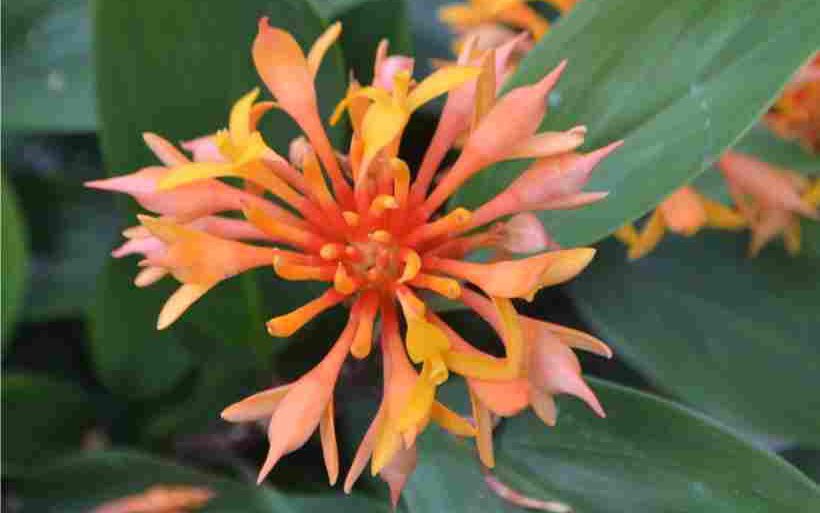
Today and tomorrow, the Bromeliad and Orchid Show in Flamingo Gardens, Davie is happening. I’ve updated the plant show list, with exciting shows and sales just about every weekend through April to May. Please let me know if I’ve missed a plant sale.
I am waiting for the details on the South Florida Palm Society sale on April 27-28 at the University of Miami, Coral Gables, FL. The sale will include rare palms and cycads. It is always great to be able to talk with the people who actually grow palms, and get their valuable advice.
Yes, palms tend to get tall. The beautiful Royal Palm, will someday be taller than your house, and you’ll be straining your neck to see it. But, there are small palms, which stay small.
The Chamaedorea genus consists 107 species of small and slender understorey palms which grow well in USDA zones 9 to 12. Generally, they originate in wet areas of Central America.
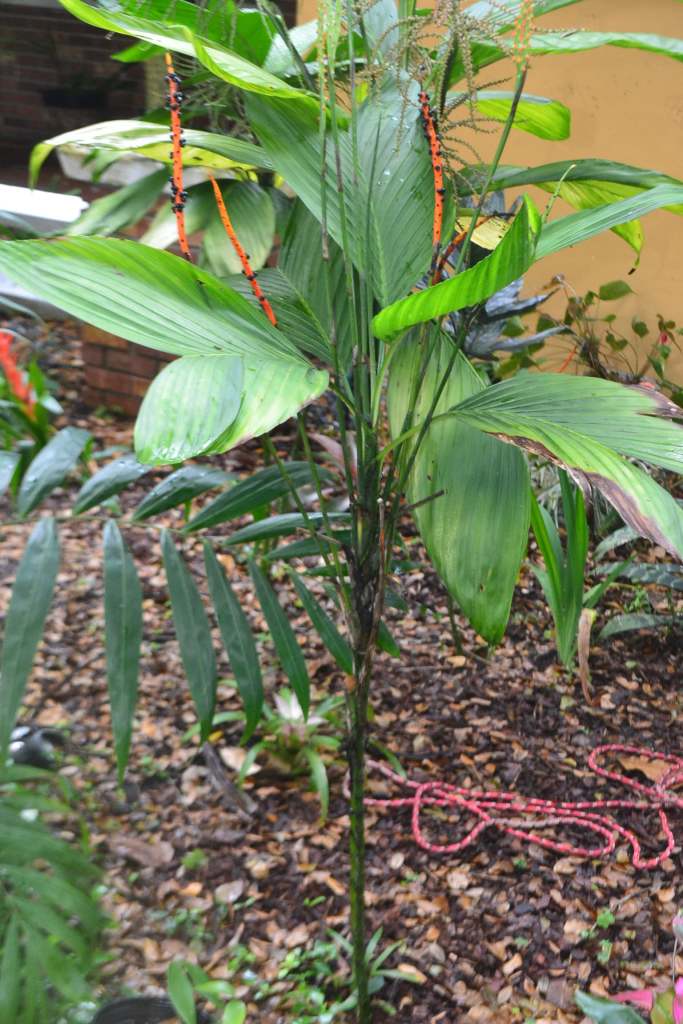
C. ernesti-augustii (Ernest August palm) needs a shady area, protection from the wind, and moist, well draining soil. It is an easy palm to grow in South Florida. It will stay small so I have mine growing close to the house for protection. The palm rarely gets any taller than about 4 ft. It is very attractive in groups, with the bright orange inflorescence.
Another favorite is C, metallica (Metallic palm) which has smaller, similarly shaped leaves. It has dark green-silver fronds. It has a similar orange inflorescence.
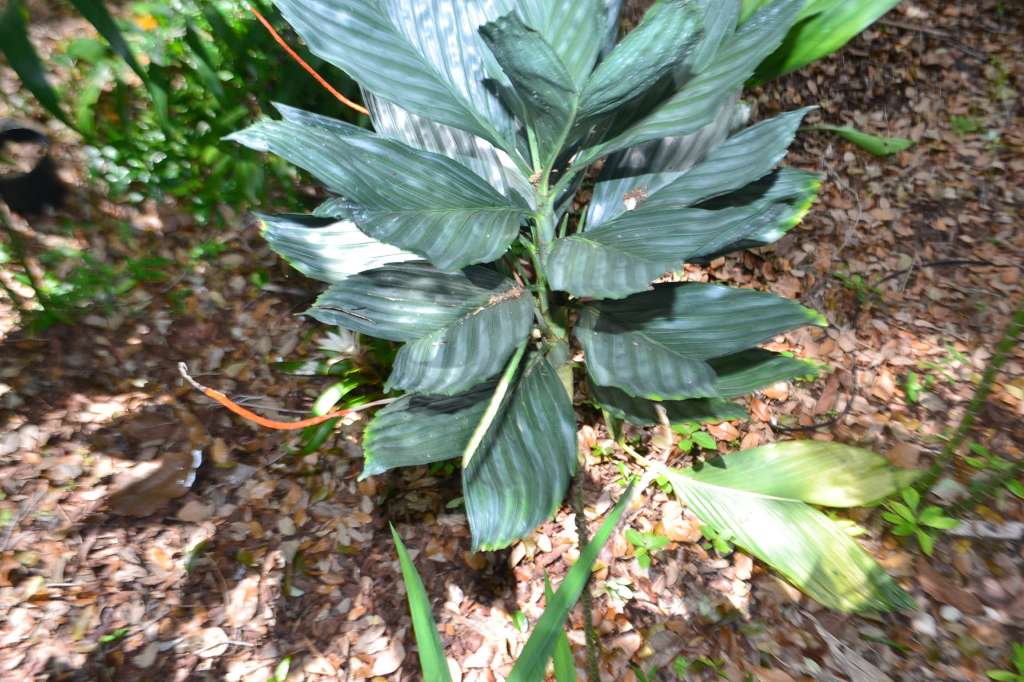
The C. metallica is nice in groups, as the trunks will tend to bend, seeking more sunlight.
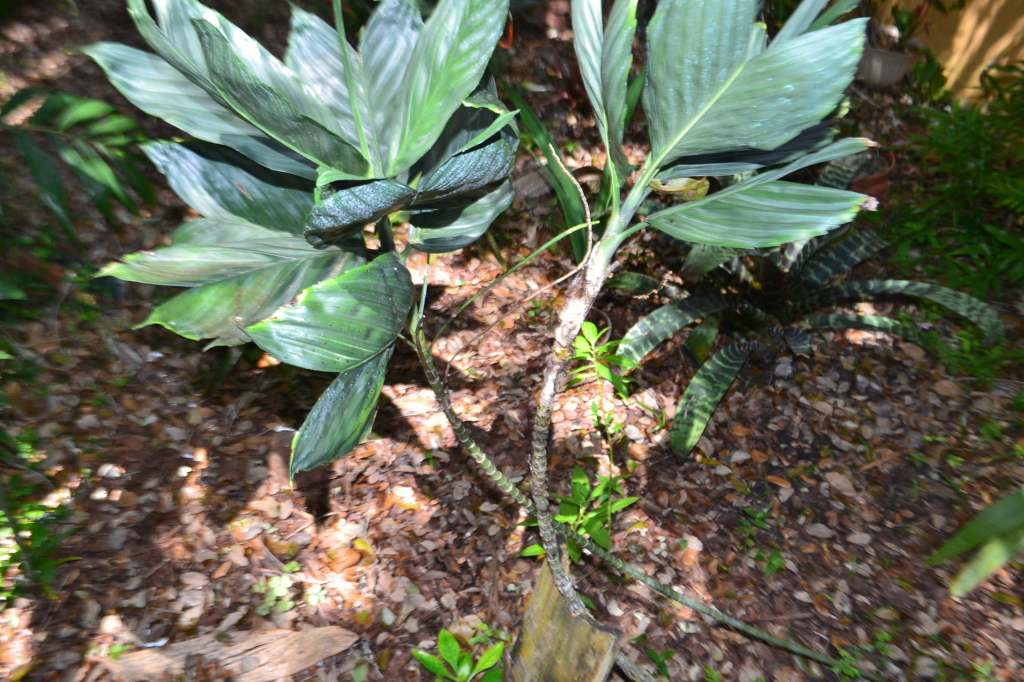
I had at one time, a C. ascendens (Velvet palm) with non-shiny fronds, hence the “velvet” common name. I’m still scouting around for a replacement. It has very few roots, so next time, I may add sand or pea pebble to the mix.
Other very common palms in the Chamaedorea genus include C. cataractanum (Cat palm) and C. elegans (Parlour palm), C. seifrizii (Bamboo palm), C. tepejilote (Pacaya palm), all of which can be grown with a minimum of care. Good advice on these palms at palmpedia.net.
At the other end of the spectrum, for ardent palm collectors only, is the C. tuerckheimer, or the Potato Chip palm, with as you guessed it, with fronds that look like potato chips with ridges. But our alkaline conditions and lack of good drainage can be very challenging to growing palms like the Potato Chip palm in Florida. But if you succeed, it is something to show off to your friends.
Happy gardening,
Dave
 Dave's Plants